
Cat Poisoning: Common Household Toxins, Signs and What to Do
 The Pet Vet Team
Poisoning in cats often comes from ordinary things already sitting around the house — a spilled cleaning product, a dropped pill, or a dog's flea treatment used on the wrong pet.
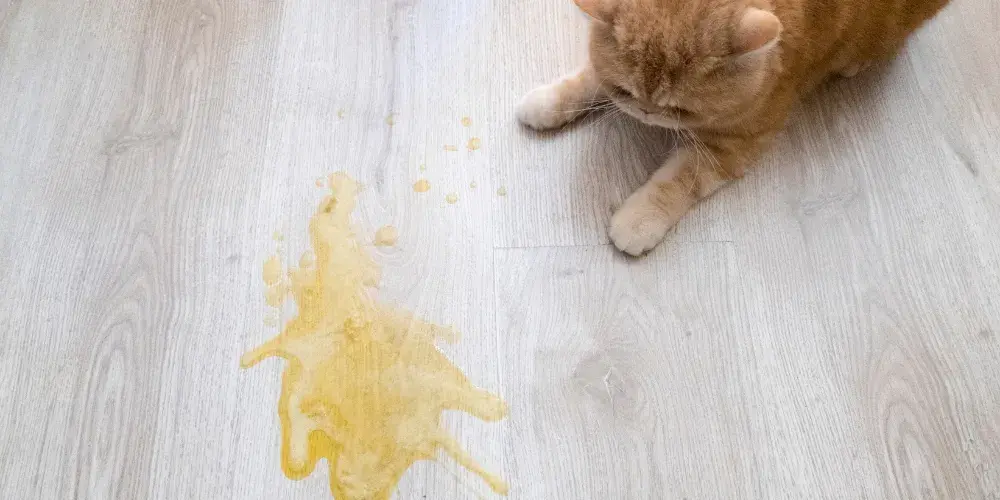
Do Cats Get Poisoned Easily?
More easily than most owners assume. Cats are curious, groom themselves constantly, and investigate new smells and textures with their mouths and paws — habits that put them in contact with a surprising range of household substances. Unlike dogs, who tend to scavenge food, cats are more often poisoned through skin contact or grooming something off their fur.
In many cases, the exact source is never identified with certainty. But a look around most Dubai homes reveals no shortage of potential culprits — cleaning products, medications, garden chemicals, and even flowers are all more accessible to a cat than owners typically realize.
How Can a Cat Be Poisoned?
Exposure happens in more ways than direct ingestion. A cat can swallow a toxin outright, eat poisoned prey like a rodent that's ingested rat bait, or groom a contaminated substance off their fur after simply walking through or brushing against it. Toxins can also be absorbed directly through the skin, particularly the paws, or inhaled if airborne.
This variety of routes is exactly why "my cat wouldn't eat that" isn't a reliable safety assumption. A cat that never touches a spilled cleaning product directly can still be poisoned hours later during a routine grooming session, which is part of what makes cat poisoning trickier to prevent than it might first appear.
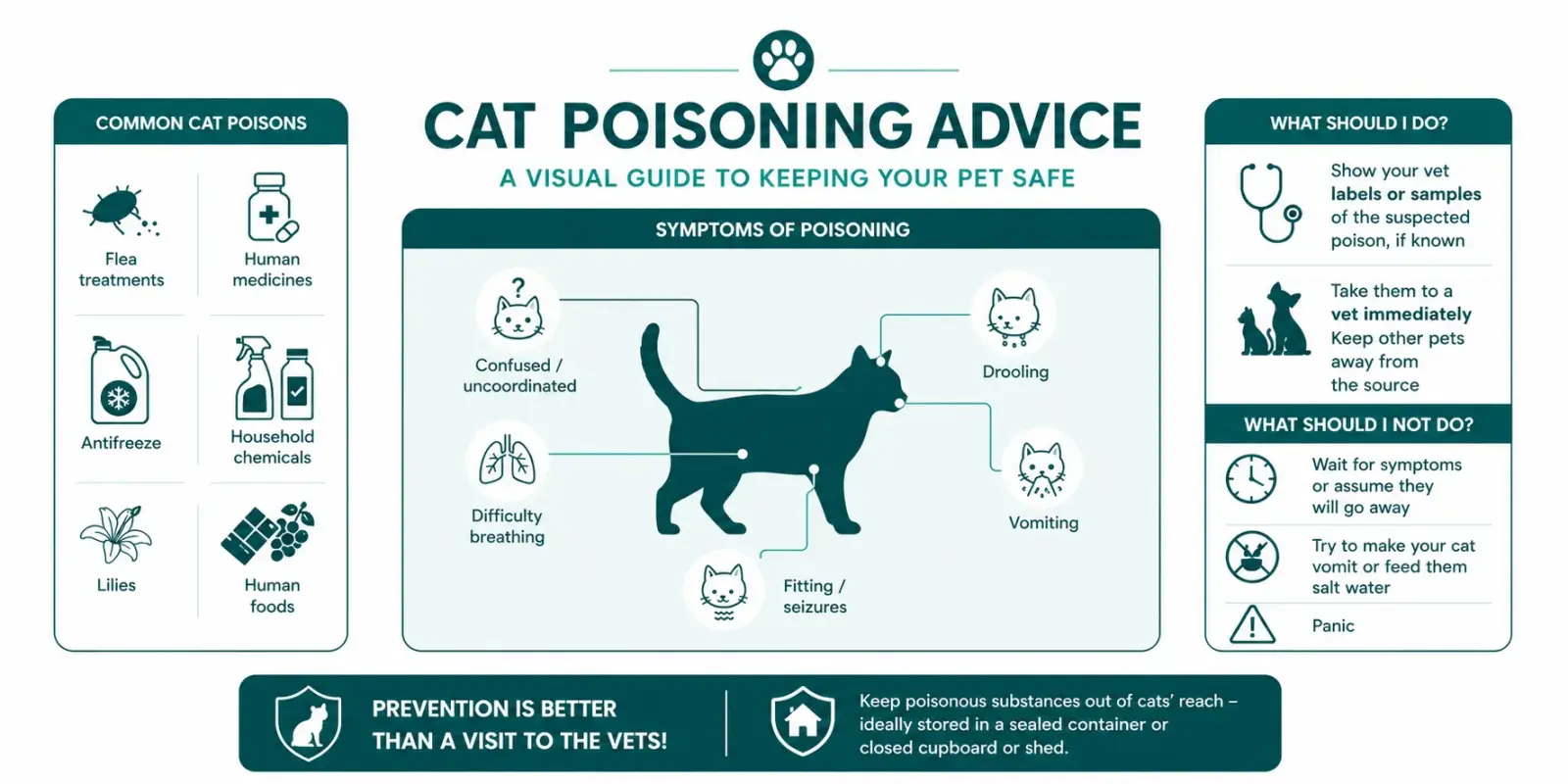
What Is the Most Common Cause of Cat Poisoning?
Rodenticides — rat and mouse poisons — are among the most frequently seen causes of poisoning in cats, usually not from a cat eating the bait directly, but from eating poisoned prey. A mouse or rat that's ingested rodenticide carries that toxin into the cat's body when eaten, which makes outdoor and indoor-outdoor cats with hunting instincts particularly vulnerable.
Beyond rodenticides, human medications, household cleaning products, and toxic plants round out the most common causes seen in veterinary practice. None of these require unusual circumstances — they're all things sitting in ordinary homes, which is exactly why poisoning remains a fairly common emergency despite most owners genuinely trying to keep their cats safe.
Household Products That Are Toxic to Cats
Cleaning and hygiene products are a major category — bleach, disinfectants, laundry capsules, and polishes can cause skin burns or internal harm, particularly products containing quaternary ammonium compounds. Human medications are just as risky; paracetamol in particular is highly toxic to cats even in small doses and can be fatal, which is why it should never be given to a cat, even if you're worried they're in pain.
Motoring products like antifreeze contain ethylene glycol, and even a tiny ingested amount can cause fatal kidney failure. Beauty products and DIY materials like paint and varnish round out the list — many cause harm either through direct toxicity or irritation and burns if groomed off the coat.
Pesticides and Dog Flea Products: A Hidden Danger
Rodenticides aside, other pesticides like insecticides and slug/snail killers are generally safe for cats when used correctly and cats are kept away from treated areas until fully dry. The bigger, more preventable danger is a specific and surprisingly common mistake: applying a dog flea or tick product to a cat.
Many spot-on dog flea treatments contain permethrin, which is highly toxic to cats. Poisoning happens either from a direct mix-up or from close contact with another animal recently treated with a permethrin-based product. This one is genuinely avoidable — dog flea products should never be used on cats, full stop, and if this happens accidentally, it's a call-your-vet-immediately situation.

Toxic Plants Cats Encounter at Home
Most cats with outdoor access don't actively seek out toxic plants, though they may nibble grass or herbs. Indoor-only cats, on the other hand, sometimes chew houseplants out of boredom or a natural urge for plant material, and kittens in particular can ingest a meaningful dose from just a small amount given their size.
Lilies deserve special mention here — less than one leaf, or a small amount of pollen groomed off the coat, is enough to cause fatal kidney failure in cats. Cut flower bouquets are just as risky as potted plants, so checking labels and avoiding lilies entirely in any cat household is genuinely one of the simplest ways to prevent a serious emergency.
How Do Poisoned Cats Act? Recognizing the Signs
Symptoms vary enormously depending on the toxin, since different substances affect different body systems.
Watch for:
- Vomiting or diarrhea (gastrointestinal)
- Tremors, incoordination, seizures, or unusual excitability or depression (neurological)
- Coughing, sneezing, or difficulty breathing (respiratory)
- Redness, swelling, or irritation on the skin
- Jaundice, or yellowing of the skin and gums (liver)
- Increased drinking, reduced appetite, or weight loss (kidney)
Some toxins affect multiple systems at once, so a cat might show a mix of these signs rather than a single clear pattern. There's no universal "poisoned cat" behavior — the safest approach is treating any combination of sudden, unexplained symptoms as a potential poisoning until proven otherwise.
How Long Does It Take for a Cat to React to Poison?
This varies significantly by substance. Some toxins cause visible symptoms within minutes to a few hours, while others — including some of the most dangerous ones, like lily exposure or certain rodenticides — can take 12 to 24 hours or longer before symptoms become obvious, even as internal damage progresses quietly in the meantime.
This delay is exactly why waiting for symptoms to confirm a suspected poisoning is risky. If you know or strongly suspect your cat has encountered something toxic, contacting your vet immediately — rather than waiting to see what develops — gives your cat the best chance, regardless of how normal they currently seem.
What Should You Do If You Think Your Cat Has Been Poisoned?
Remove your cat from the source immediately and isolate them from other pets. Contact your vet right away with as much detail as you can gather — what the substance was, when exposure happened, and how much may have been involved. Bringing the packaging, a plant sample, or a photo with you to the clinic genuinely helps guide treatment.
If the substance is on your cat's skin, coat, or paws, try to prevent further grooming and follow your vet's specific instructions before washing — some chemicals require particular handling to avoid making absorption worse. Never attempt to induce vomiting unless a vet specifically tells you to, since this can cause more harm with certain toxins.
Can You Treat a Poisoned Cat at Home?
Only in very limited circumstances, and always under veterinary guidance. If contamination is mild and confined to the coat, your vet may talk you through safe decontamination — but this typically still involves a conversation with your clinic first, since washing incorrectly can actually increase absorption of certain chemicals rather than reduce it.
For anything beyond mild surface contamination, home treatment isn't appropriate. Removing a contaminated collar (which may itself be affected, particularly some flea collars), clipping away heavily soiled fur, and using warm soapy water are reasonable first steps once your vet has confirmed it's safe to proceed — but this is guided first aid, not a substitute for professional evaluation.
How Vets Treat Poisoning, and How to Prevent It
Treatment depends entirely on the toxin involved, and might include decontamination, IV fluids to support organ function, targeted medications, and close monitoring, sometimes over several days depending on severity. The sooner treatment begins, the better a cat's chances of full recovery.
Prevention comes down to storage habits more than anything else: keep chemicals, medications, and pesticides in closed cupboards rather than open shelves, since cats are notorious for pushing things off ledges. Clean up spills immediately, never use products meant for people or dogs on your cat, and check flower labels before bringing bouquets home.

A Quick Word From Our Team
If you suspect your cat has come into contact with anything toxic, please don't wait to see how they do. Contact The Pet Vet Veterinary Clinic in Nad Al Hamar immediately with as much detail as you can gather about the substance involved. With poisoning, how quickly you act genuinely shapes the outcome, and our team is ready to guide you through next steps right away.
Frequently asked questions
Should I keep a pet poison hotline number saved, or just call my vet?
Either is a good starting point, but your vet is usually the fastest route to actual treatment, especially in an emergency. Poison hotlines can offer useful general guidance, but your vet knows your cat's history and can act immediately rather than requiring a second call afterward.
Are essential oil diffusers safe to use around cats?
Not always. Certain essential oils, including tea tree oil, are toxic to cats, and even diffused oils can affect sensitive respiratory systems or settle on fur to be groomed off later. If you use a diffuser, research the specific oil first or choose a cat-safe room with good ventilation the cat can avoid if needed.
Can my cat get sick from contact with a dog that's been treated with flea medication?
Yes, this is a real risk, particularly with permethrin-based dog flea treatments. Close contact, grooming, or sleeping alongside a recently treated dog can transfer enough product to affect a cat. Keeping treated and untreated pets separated for the timeframe your vet recommends helps avoid this.
Is it safe to use flea sprays or weed killer in my garden if I have a cat with outdoor access?
Generally yes, when used correctly and cats are kept away from treated areas until the product has fully dried, following label instructions closely. If you're ever unsure about a specific product, it's worth checking with your vet or the manufacturer before applying it anywhere your cat has access.
My cupboards don't lock — how can I still keep chemicals cat-proof?
Simple childproof cabinet latches, widely available and inexpensive, work well for most cats and are easy to install without tools. For anything particularly high-risk, like medications or concentrated cleaning products, consider storing them on a high shelf inside a closed cupboard as an added layer of protection.
Written by
The Pet Vet Team
Subscribe to Our Newsletter
Sign up for weekly pet health tips and insights from our veterinarians.