
Dog Poisoning in Dogs
 The Pet Vet Team
Worried your dog got into something toxic? Learn how to recognize the early signs of poisoning, what to do in the first few minutes, and how vets in Dubai treat and support recovery. This guide from The Pet Vet in Nad Al Hamar covers the most common toxins, emergency steps, and simple ways to poison-proof your home and daily walks.

What Counts as Poisoning in Dogs?
Poisoning happens when your dog's body absorbs a substance it can't safely process, whether that's through eating it, breathing in fumes, or absorbing something through the skin or paws. Once a toxin gets into the bloodstream, it can affect almost any organ — the liver, kidneys, heart, lungs, nervous system, or blood cells.
How serious the outcome is depends on several things: the toxin itself, how much your dog was exposed to, their size and age, and how quickly they get treatment. A small dose of a strong toxin can hit a puppy or small-breed dog especially hard.
At The Pet Vet in Nad Al Hamar, we treat everything from mild stomach upset to genuine emergencies, and the difference almost always comes down to timing.
How Long Before a Dog Shows Signs of Poisoning?
This is one of the most common questions worried owners ask, and the honest answer is: it depends entirely on the toxin. Some substances cause vomiting, drooling, or trembling within minutes of exposure. Others work quietly in the background for hours, or even days, before anything looks visibly wrong.
Grape and raisin toxicity is a good example — it can silently damage a dog's kidneys for 24 to 48 hours before symptoms show up at all. This delay creates a false sense of security, because everything can look fine on the surface while real damage is happening internally. It's exactly why "let's just wait and see" is one of the riskiest responses to a suspected exposure.
Everyday Items That Can Poison Your Dog
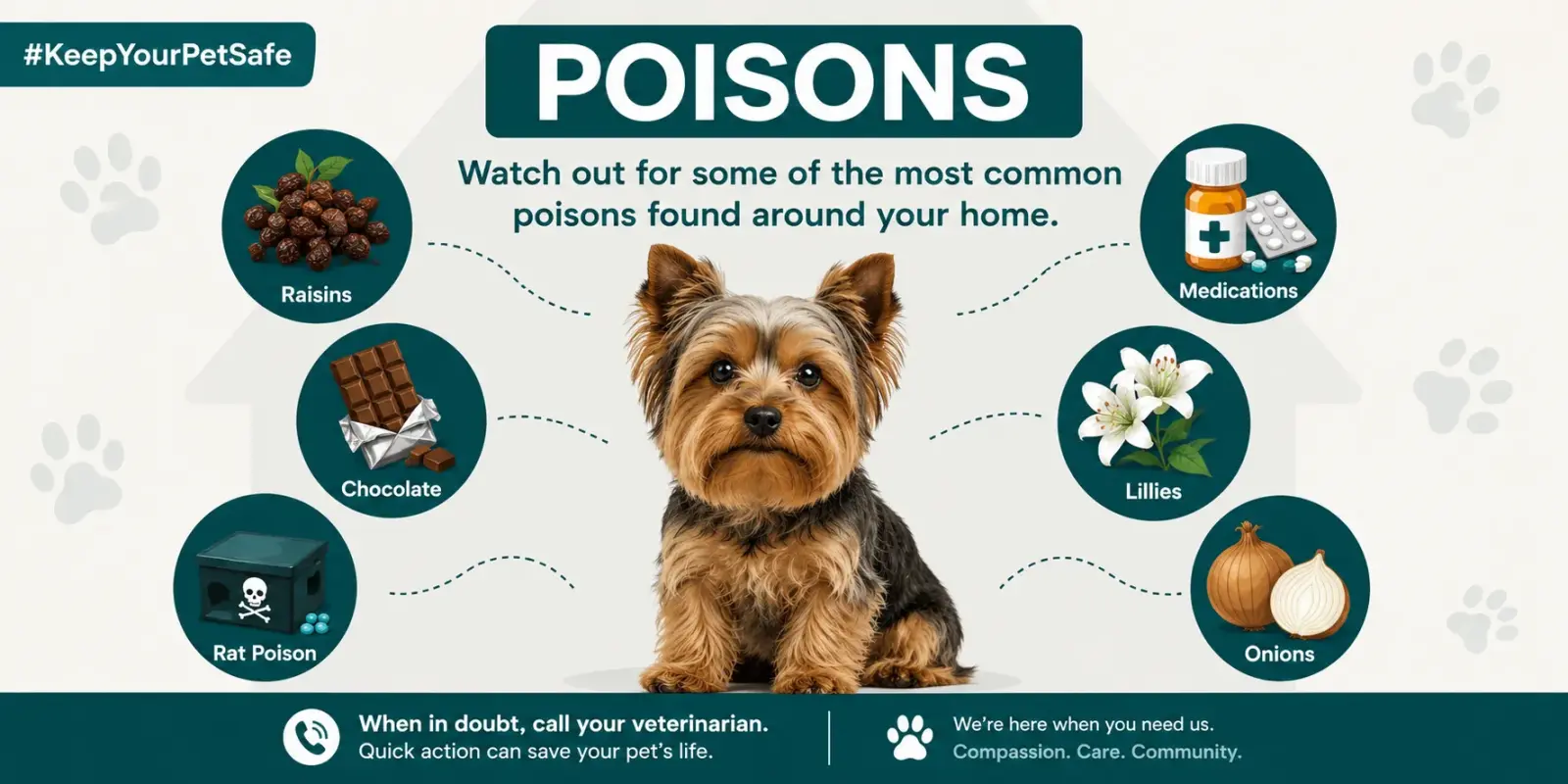
Most poisoning cases we see don't involve rare or unusual chemicals — they involve things already sitting in most homes. Chocolate, grapes, raisins, onions, garlic, and xylitol (a sweetener found in gum, sugar-free treats, and even some peanut butter) are common kitchen culprits that many owners don't realize are dangerous.
Human medications are just as risky, including ibuprofen, paracetamol, antidepressants, and ADHD medications.
Household chemicals such as bleach, pesticides, rodenticides, and antifreeze pose serious threats too, along with garden and houseplants like oleander, sago palm, peace lily, and azaleas. In Dubai specifically, we also see cases tied to discarded food, chemical residue in public spaces, and substances dogs pick up on regular walks.
How Will You Know If Your Dog Is Poisoned?
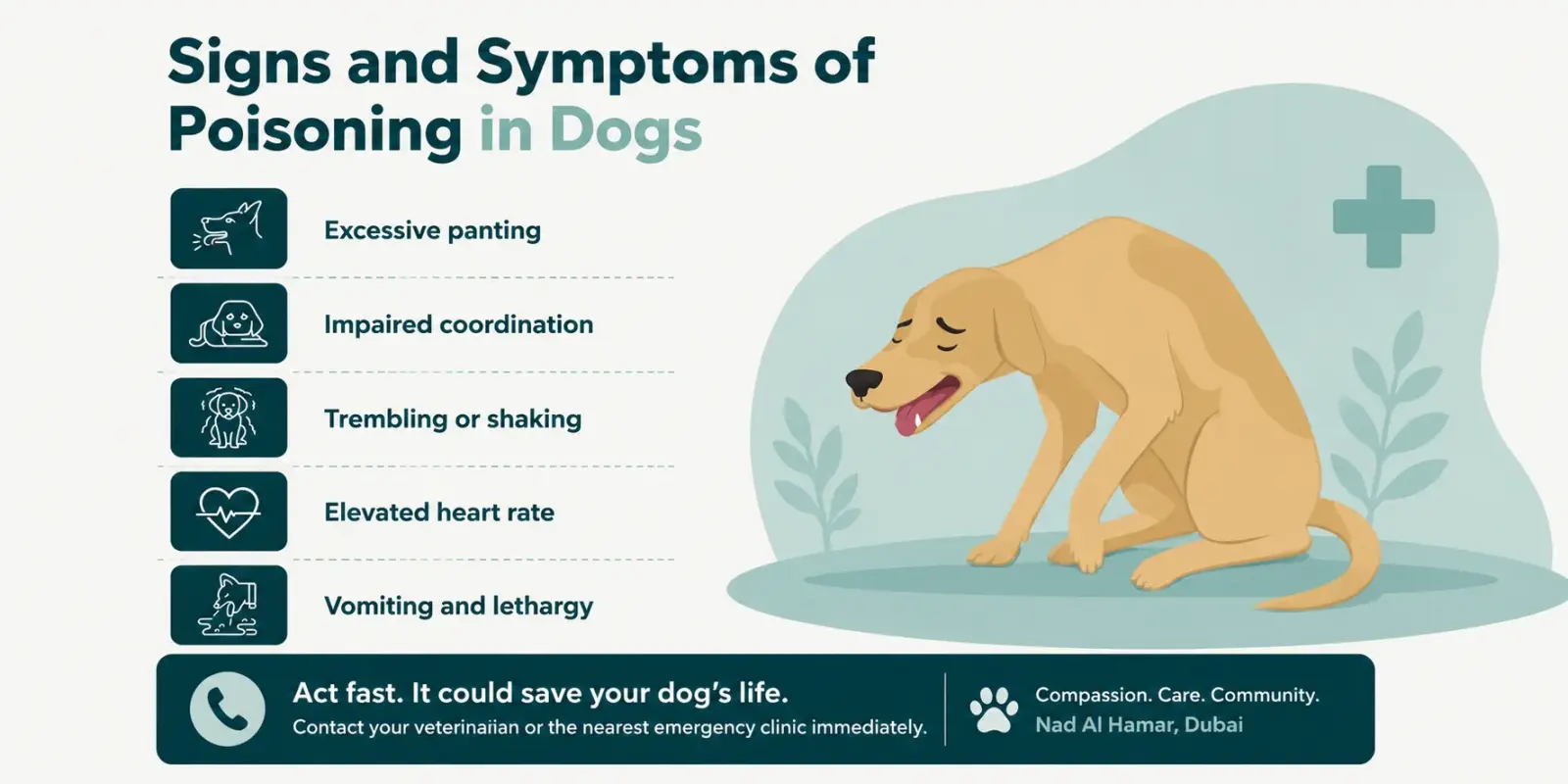
Poisoning can affect several body systems at once, so the signs vary depending on what your dog was exposed to. Some dogs react within minutes; others seem completely normal for hours before suddenly declining.
Watch for a combination of the following:
- Vomiting, diarrhea, drooling, or a sudden loss of appetite
- Tremors, wobbliness, disorientation, pacing, or seizures
- Rapid breathing, coughing, or pale, blue, or grey gums
- Unusual restlessness, weakness, or sudden collapse
The first signs of a poisoned dog can be subtle, and mild-looking symptoms don't always mean mild poisoning. A dog who seems only slightly "off" can still be in the middle of a serious internal crisis, which is why any suspected exposure is worth a call to your vet.
Can a Dog Recover From Poisoning on Its Own?
In rare cases involving a tiny amount of a low-toxicity substance, mild symptoms might pass without intervention. But this genuinely isn't something to gamble on.
Many toxins cause internal damage well before it becomes visible, and by the time a dog looks noticeably unwell, treatment options can be more limited and recovery more difficult.
Assuming poisoning will simply resolve on its own is one of the most common — and most costly — mistakes we see owners make. The safest approach is always to treat any suspected exposure as urgent and speak to a vet immediately, rather than waiting to see how things unfold at home.
What to Do in the First Few Minutes
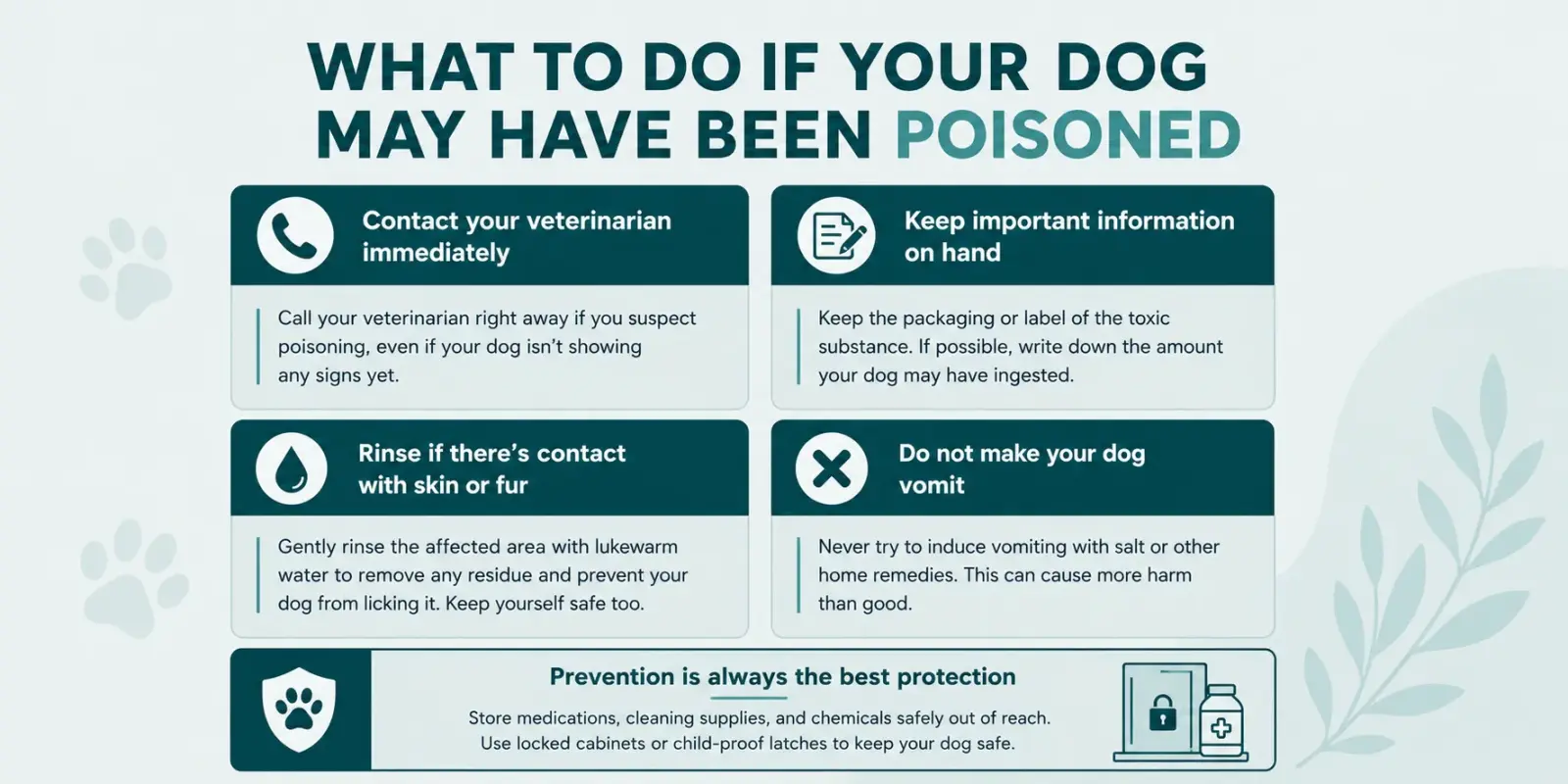
If you suspect poisoning, try to stay calm and act quickly. Move your dog away from the substance right away, and keep other pets away from the area too. If the toxin is on their fur or paws, stop them from licking it off — an Elizabethan collar can help here — and gently rinse the affected area with water if it's safe to do so.
Call your vet immediately and share as much detail as you can: what the substance was, roughly how much was involved, and when exposure happened. If possible, bring the packaging, a plant sample, or a photo of the product with you.
Most importantly, never try to make your dog vomit unless a vet specifically tells you to — some substances cause far more damage coming back up than staying down.
How Vets Treat and Flush Poison From a Dog's System
Treatment depends heavily on the toxin and how recently exposure happened. If it was recent, vets may induce vomiting or give activated charcoal, which binds many toxins in the gut before they're absorbed into the bloodstream.
For skin or eye exposure, thorough washing and decontamination come first, using soap and water or saline as needed.
So how do you flush poison out of a dog's system once it's already circulating? Intravenous fluids are the main tool here — they support kidney function, improve circulation, and help the body clear toxins naturally over time.
Depending on the toxin, vets may also add medications for seizures, nausea, liver support, or heart function, alongside close monitoring of vital signs throughout treatment.
Recovery and What to Expect Afterward
Recovery timelines vary quite a bit. Dogs treated promptly for milder exposures often bounce back within one to three days, sometimes going home the same day they're seen.
More serious cases involving the liver, kidneys, heart, or nervous system can require days of hospitalization and weeks or months of ongoing management afterward.
Even once a dog seems completely back to normal, vets often recommend follow-up blood tests, since some organ damage takes time to fully reveal itself.
The single biggest factor in a good outcome usually isn't the specific toxin — it's simply how quickly treatment began after exposure.
Preventing Poisoning at Home and Around Dubai
Prevention is always easier than emergency treatment, and most cases are genuinely avoidable. Store medications, cleaning products, and pesticides well out of reach, ideally behind closed cabinet doors.
Avoid sharing table scraps, since chocolate, grapes, onions, and xylitol-containing foods are frequent culprits in cases we see.
Check your garden for toxic plants like oleander or sago palm, and consider pet-safe alternatives where possible.
During walks around Dubai, stay alert to discarded food, chemical spills, and unfamiliar plants your dog might sniff or nibble along the way. A handful of small, consistent habits at home and outdoors can prevent the majority of poisoning emergencies we treat.
When Should You Go to an Emergency Vet?
If your dog has eaten a known toxin, don't wait around for symptoms to appear before seeking help. The same urgency applies to seizures, collapse, difficulty breathing, severe or repeated vomiting, tremors, or sudden disorientation — these all warrant immediate emergency care.
Poisoning is rarely something that improves without treatment, and getting help quickly can genuinely be the difference between a full recovery and a life-threatening outcome.
At The Pet Vet in Nad Al Hamar, our team is set up to respond fast to poisoning emergencies, because when toxins are involved, every minute really does count.
A Quick Word From Our Team
If you think your dog may have eaten, inhaled, or touched something toxic, don't wait to see what happens next. Contact The Pet Vet Veterinary Clinic in Nad Al Hamar right away — our team can talk you through immediate first-aid steps over the phone and prepare for your arrival. Acting quickly gives your dog the best possible chance at a smooth recovery, and we're here to help no matter how urgent it feels.
Frequently asked questions
What should I bring with me to the vet if I suspect poisoning?
Bring the product packaging, a plant clipping, or the medication container if you can find it, along with details like the time of exposure and roughly how much your dog may have consumed. This helps your vet identify the toxin quickly and choose the right treatment without delay.
Is treating dog poisoning expensive in Dubai?
Costs vary widely depending on the toxin and severity. Mild cases needing observation cost far less than those requiring hospitalization, IV fluids, or intensive monitoring. Pet insurance can help offset these costs, so it's worth checking your coverage options with your vet or insurer ahead of time.
Are there garden plants in the UAE I should be especially cautious about?
Yes. Oleander, sago palm, and certain succulents commonly used in Dubai landscaping can be toxic if chewed or swallowed. Drought-tolerant, low-maintenance plants aren't automatically pet-safe, so it's worth checking your own garden and any shared green spaces your dog regularly visits.
Will my dog need follow-up appointments after a poisoning incident?
Often, yes. Even dogs who appear fully recovered may need follow-up blood tests to confirm their liver and kidneys are working normally. Your vet will advise based on the toxin involved and how your dog responded during initial treatment.
Does the season affect poisoning risk in Dubai?
To some extent. Warmer months can bring more exposure to pesticides, discarded food, and garden chemicals outdoors, while cooler months often mean longer walks and more contact with unfamiliar plants or waste along the way. Staying alert year-round is the safest habit to build.
Written by
The Pet Vet Team
Subscribe to Our Newsletter
Sign up for weekly pet health tips and insights from our veterinarians.