Cherry Eye in Dogs
 The Pet Vet Team
A sudden red or pink lump in the corner of your dog's eye can look alarming, but it's often a treatable condition called cherry eye. This guide from The Pet Vet in Nad Al Hamar explains why cherry eye happens, which breeds are prone to it, why home remedies don't work, and what surgery and recovery actually involve.
What Is Cherry Eye in Dogs?
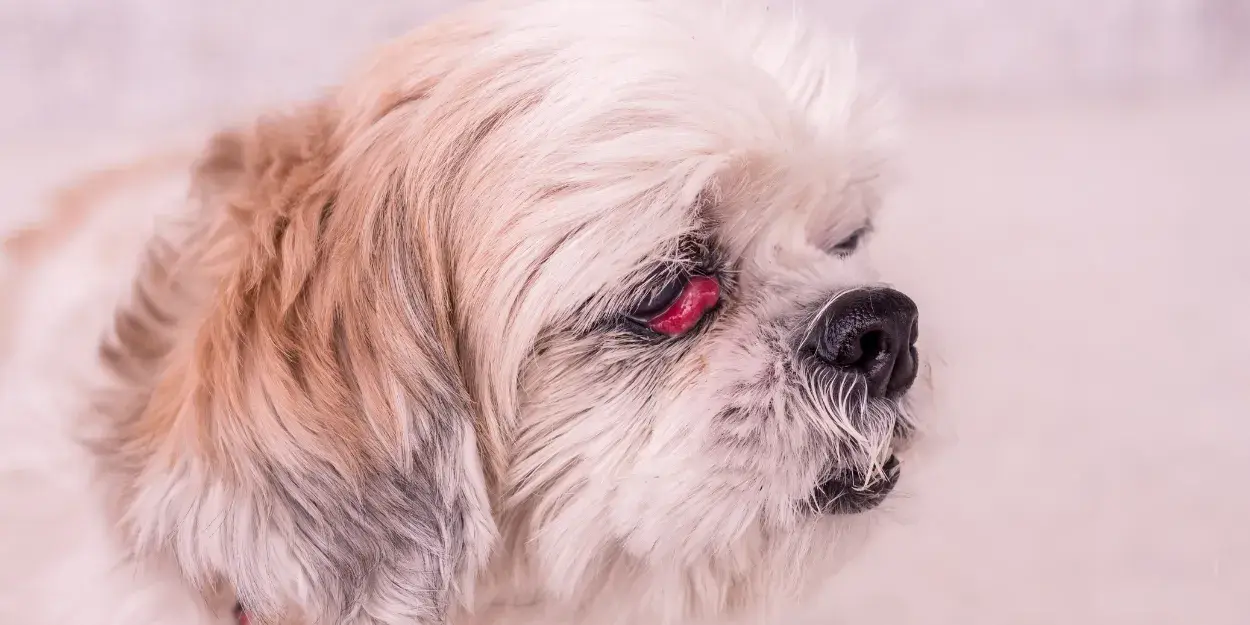
Dogs have a third eyelid, tucked into the inner corner of the eye, that helps protect against dust and debris while also producing a significant share of their tears. Inside this eyelid sits a specialized tear gland, and cherry eye happens when the connective tissue holding that gland in place weakens or stretches, allowing the gland to slip out of position.
The result is a round, red or pink swelling in the corner of the eye that resembles a small cherry — hence the name. It can affect one eye or both, sometimes appearing in the second eye months after the first. Despite the dramatic appearance, this isn't purely cosmetic: the gland involved plays a real role in keeping the eye healthy.
Why Has My Dog Suddenly Got Cherry Eye?
Cherry eye is generally considered an inherited condition — some dogs are simply born with weaker connective tissue supporting the gland, which is why certain breeds see it far more often than others. Most cases appear in dogs under two years old, while the supporting tissue is still developing and hasn't fully matured.
That said, genetics isn't the whole story. Trauma from rough play, fights, or eye injuries can stretch the ligaments holding the gland in place, and chronic inflammation from allergies, conjunctivitis, or infections can add pressure that pushes the gland out of position. In Dubai specifically, dust, dry air, and seasonal allergens can contribute to the kind of ongoing irritation that makes prolapse more likely in already-predisposed dogs.
Is Cherry Eye Painful, and Is It Contagious?
Cherry eye itself usually causes more irritation than severe pain, though discomfort tends to build the longer the gland stays exposed. Dogs often show this through squinting, excessive blinking, pawing at the eye, or rubbing their face against furniture — frequently before an owner even notices the visible swelling.
Cherry eye is not contagious to humans or other pets. It's a structural problem with connective tissue, not an infectious disease, so there's no risk of it spreading between your dog and family members or other animals in the household. The only exception worth noting is that some dogs are simply more genetically prone to developing it in both eyes over time.
Symptoms of Cherry Eye in Dogs
The clearest sign is the visible pink or red mass in the inner corner of the eye, but several other symptoms usually accompany it:
- Excessive tearing or watery eyes
- Frequent blinking or squinting
- Pawing or rubbing at the affected eye
- Redness, inflammation, or sensitivity to light
- Thicker discharge if a secondary infection develops
Some dogs seem barely bothered despite the visible prolapse, while others become noticeably irritable or frustrated by the constant irritation. Either way, the appearance alone — regardless of how the dog is behaving — is reason enough to have it checked.
Breeds Most Commonly Affected
Cherry eye can technically occur in any dog, but it's far more common in breeds with shallow eye sockets, prominent eyes, or loose facial tissue. Beagles, Bulldogs, Pugs, Cocker Spaniels, Boston Terriers, Shih Tzus, Lhasa Apsos, Great Danes, and Cane Corsos are among the breeds seen most often with this condition.
If your dog belongs to one of these breeds, it's worth keeping a closer eye on their eyes during routine grooming or check-ins, since early detection tends to make treatment simpler and recovery smoother.
Can Cherry Eye Heal Itself or Be Treated at Home?
Occasionally, a mild prolapse may temporarily slip back into position on its own, but this is rarely permanent, and true cherry eye almost never resolves for good without treatment. Trying to physically push the gland back into place at home isn't recommended — it's uncomfortable for your dog and the gland typically prolapses again within hours or days.
Warm compresses or over-the-counter eye drops might reduce swelling slightly and make the prolapse look smaller temporarily, but they don't fix the underlying structural issue. The gland has slipped because its supporting tissue has failed, and no home remedy can restore that. A veterinary evaluation is really the only path to a lasting fix.
What Happens If Cherry Eye Is Left Untreated?
Leaving cherry eye untreated puts the gland's tear-producing function at risk. Since this gland contributes a substantial portion of your dog's tears, prolonged displacement can eventually reduce tear production and lead to keratoconjunctivitis sicca, better known as dry eye — a chronic condition that can cause discomfort, corneal damage, and pigmentation changes over time.
Untreated cherry eye can also lead to chronic inflammation, corneal ulcers, and secondary bacterial infections as the exposed gland continues rubbing against surrounding tissue. None of this happens overnight, but the risks compound the longer treatment is delayed, which is why most vets recommend addressing it sooner rather than waiting to see if it settles down.
How Cherry Eye Is Diagnosed
Diagnosis usually starts with a straightforward visual exam, since the prolapsed gland is easy to spot. From there, your vet will likely run a few additional tests to check for complications rather than stopping at the obvious finding.
A fluorescein stain test checks the cornea for scratches or ulcers using a special dye, while a Schirmer tear test measures how much tear film your dog is producing — important for catching early signs of dry eye. A tonometry test measures eye pressure to rule out glaucoma. Together, these give your vet a fuller picture before recommending treatment.
Cherry Eye Surgery: The Gold-Standard Treatment
Surgery is considered the standard treatment because it corrects the actual problem rather than just masking the swelling. Modern veterinary ophthalmology strongly favors gland-preserving techniques over the older approach of simply removing the gland, since removal significantly raises the risk of permanent dry eye later in life.
The most widely used method is the Morgan Pocket Technique, where a small pocket is created in the surrounding tissue and the gland is tucked back into place and secured with dissolvable sutures. An alternative, the tacking technique, anchors the gland directly back into position with sutures instead. Your vet will choose the best approach based on your dog's anatomy and the specifics of the prolapse.
Recovery, Prevention and When to See a Vet
Most dogs recover well within about two weeks. Expect some mild redness and swelling during the first week, along with prescribed antibiotic or anti-inflammatory eye medication and an Elizabethan collar to prevent rubbing that could disrupt healing. Follow-up visits confirm the gland has stayed in position as swelling subsides.
Because genetics play such a large role, complete prevention isn't always possible — but managing allergies promptly, treating eye infections early, and avoiding rough play in predisposed young dogs can reduce additional risk. If you notice any red or pink swelling in your dog's eye, it's worth scheduling an exam soon; while cherry eye isn't usually a middle-of-the-night emergency, delaying treatment does raise the risk of complications.
A Quick Word From Our Team
If you've spotted a red or pink lump in your dog's eye, our team at The Pet Vet Veterinary Clinic in Nad Al Hamar can take a closer look and talk you through the right next steps. Early evaluation makes treatment simpler and gives your dog the best chance of a smooth, complication-free recovery. Don't hesitate to reach out if something looks off — we're happy to help you figure out what's going on.
Frequently asked questions
How much does cherry eye surgery cost in Dubai?
Costs vary by case, but surgery is often in the range of AED 3,500–4,500. Factors like whether both eyes are affected or complications are present can influence the final estimate, so a veterinary exam is needed for accurate pricing.
Can cherry eye come back after surgery?
Recurrence is possible but uncommon when surgery is performed correctly and post-operative care instructions, including collar use and follow-up visits, are followed closely. Your vet will monitor healing to catch any early signs of the gland slipping again.
Does cherry eye usually affect one eye or both?
It can affect either. Some dogs develop it in just one eye and never experience it in the other, while some go on to develop it in the second eye weeks or months later, especially if the underlying tissue weakness affects both sides.
Is cherry eye an emergency, or can it wait for a scheduled appointment?
It's rarely a middle-of-the-night emergency, but it shouldn't be ignored either. Booking an appointment within a few days of noticing the swelling is a reasonable timeline, though sudden severe swelling, pain, or discharge warrants a sooner visit.
Will my dog need to wear a cone after cherry eye surgery?
Yes, almost always. An Elizabethan collar prevents your dog from rubbing or scratching the surgical site while it heals, which significantly lowers the risk of the gland prolapsing again or the incision becoming irritated or infected.
Written by
The Pet Vet Team
Subscribe to Our Newsletter
Sign up for weekly pet health tips and insights from our veterinarians.